
Teachers Agree to Furlough Day -- Courant.com: "Teachers Agree to Furlough Day
June 11, 2009
VERNON – - Teachers have agreed to take a furlough day, saving the school system about $150,000 and provided the board of education with about half of a $300,000 cut mandated by the Mayor.
After the town's $76 million budget was approved last month, the board of education was asked to cut $300,000 from the $45.8 million education spending plan by Mayor Jason McCoy. On Monday, the board and teachers agreed to a furlough day Jan. 15, 2010 at a savings of $150,000. The remaining cuts will be taken from reductions in insurance and supply accounts.
The 2009-10 school year will be reduced to 181 days, one above the state-mandated 180 days of school."
June 11, 2009
 vernon connecticut
June 10, 2009
Your Reader-Submitted Articles -- Courant.com
 Mayor of Vernon Jason L. McCoy
 presents fire gear to the city Mao, Valverde, Dominican Republic.
Your Reader-Submitted Articles -- Courant.com: "Vernon
Town of Vernon Donates Fire Gear Government Announcements
Submitted by Leslie Campolongo on 2009-06-09.
The town of Vernon is pleased to announce the donation of fire gear to the city of Mao, Dominican Republic, on May 2 at the Hartford Fire Department Training Academy.
Mayor Jason L. McCoy and Vernon Fire Chief William Call joined together with the city of Hartford to present the equipment, consisting of protective coats and helmets formerly used by the town of Vernon to Mayor Odalis Rodriguez and Fire Chief Manual Peralita of Mao, located in Valverde, Dominican Republic."
Town of Vernon Donates Fire Gear Government Announcements
Submitted by Leslie Campolongo on 2009-06-09.
The town of Vernon is pleased to announce the donation of fire gear to the city of Mao, Dominican Republic, on May 2 at the Hartford Fire Department Training Academy.
Mayor Jason L. McCoy and Vernon Fire Chief William Call joined together with the city of Hartford to present the equipment, consisting of protective coats and helmets formerly used by the town of Vernon to Mayor Odalis Rodriguez and Fire Chief Manual Peralita of Mao, located in Valverde, Dominican Republic."
June 4, 2009
News & Events: Town of Vernon CT - Scholarship Recipient Tyler McCombe

L to R - Cliff Edwards, GPCC President, Donna McCombe, Scholarship recipient Tyler McCombe, Gordy McCombe and Vernon's Mayor, Jason McCoy at the Presentation. Congratulations!
 jason mccoy
 gene pitney
June 3, 2009
Courant.com Vernon Talcottville Memorial Day Parade

"Vernon Talcottville Memorial Day Parade Front center Vernon's Mayor Jason McCoy, son Josh McCoy, Deputy Mayor Brian Motola back left, Vernon Town Administrator John Ward marching in Vernon-Talcottville Memorial Day Parade Date submitted: 05/31/2009"
-- Courant.com
-- Courant.com
jason mccoy mccoy for mayorjason mccoy
 energy
 news
news
May 31, 2009
Governor Rell's 2nd Proposed Budget Includes Deeper Cuts
Channel 3 Watch The News Clip & Listen To The Debate: Rell's 2nd Proposed Budget Includes Deeper Cuts
WFSB Hartford-New Haven
jason mccoy
 m. jodi rell m. jodi rell
  connectucut budget deficit
  mjodirell
  donald williams
  donaldwilliams
WFSB Hartford-New Haven
jason mccoym. jodi rell m. jodi rell connectucut budget deficit mjodirell donald williams donaldwilliams
Tolland County News: Governor's Rells Remarks
Tolland County News: Governor's Rells Remarks
Gov. Rell Delivers 2nd 'No Tax' Budget of Session
See Detailed Proposal
Listen to the Governor's Remarks
“This new budget contains deeper cuts and no tax increases. It also preserves municipal aid so that tax increases are not passed on to local taxpayers. Connecticut residents and businesses cannot afford massive tax increases,” Governor Rell said. “It is a budget that the families of Connecticut can afford and one that their government can ill-afford to delay any longer. They are counting on us to make those cuts and to finish our business on time."
m. jodi rell connectucut budget deficit mjodirell donald williams
Gov. Rell Delivers 2nd 'No Tax' Budget of Session
See Detailed Proposal
Listen to the Governor's Remarks
“This new budget contains deeper cuts and no tax increases. It also preserves municipal aid so that tax increases are not passed on to local taxpayers. Connecticut residents and businesses cannot afford massive tax increases,” Governor Rell said. “It is a budget that the families of Connecticut can afford and one that their government can ill-afford to delay any longer. They are counting on us to make those cuts and to finish our business on time."
m. jodi rell connectucut budget deficit mjodirell donald williams
Governor Rell's 2nd Proposed Budget Includes Deeper Cuts
Governor Rell's 2nd Proposed Budget Includes Deeper Cuts
HARTFORD, Conn. -- Facing a looming deadline on setting the state's budget, Gov. Jodi Rell offered a second budget Thursday to the General Assembly."The economy has worsened since I presented my first budget in February and I had hoped the Legislature would have acted by now with a real sense of urgency," the Governor said. "With a week left in the session, and absent any meaningful action by the legislative majority, I am providing the leadership needed to get a budget agreement before the session ends. That is what the families and taxpayers of this state expect."
HARTFORD, Conn. -- Facing a looming deadline on setting the state's budget, Gov. Jodi Rell offered a second budget Thursday to the General Assembly."The economy has worsened since I presented my first budget in February and I had hoped the Legislature would have acted by now with a real sense of urgency," the Governor said. "With a week left in the session, and absent any meaningful action by the legislative majority, I am providing the leadership needed to get a budget agreement before the session ends. That is what the families and taxpayers of this state expect."
May 30, 2009
Rell Scorches Democrats Over Call For Special Budget Session; They Call Her Comments 'Unproductive' And Say She's To Blame - Capitol Watch
Rell Scorches Democrats Over Call For Special Budget Session; They Call Her Comments 'Unproductive' And Say She's To Blame - Capitol Watch
On Friday I listened to Governor Rell's speech to the press about the second budget she put together, and today again I listed in the news. The budget that the Governor came up with is good for Towns and Cities in Connecticut. That was absolutely the best and most confident speech I have heard. I saw the Governor come out of the conference on Friday after her speeech, she looked very confident, intense and very serious. Truly Connecticut CEO. Those statements in that Speech was very reassuring, very confident, realistic- practical and pragmatic. That was exactly what folks needed to hear, that she is fixing what can be fixed, making up for what can be made up for and what can’t be fixed or made up for, that Legislators need to get on board or out of the way – becasue this Governor made it clear she is taking control of what can’t be fixed or made up for and the legislators need to set politics aside, take advantage of the Governor's hard work, and go home for then summer. When people believe times are tough, frank realistic responses are needed to calm folks down.
Shared via AddThis
Connectucut budget deficit, Donald Williams, M. Jodi Rell
jason mccoy
On Friday I listened to Governor Rell's speech to the press about the second budget she put together, and today again I listed in the news. The budget that the Governor came up with is good for Towns and Cities in Connecticut. That was absolutely the best and most confident speech I have heard. I saw the Governor come out of the conference on Friday after her speeech, she looked very confident, intense and very serious. Truly Connecticut CEO. Those statements in that Speech was very reassuring, very confident, realistic- practical and pragmatic. That was exactly what folks needed to hear, that she is fixing what can be fixed, making up for what can be made up for and what can’t be fixed or made up for, that Legislators need to get on board or out of the way – becasue this Governor made it clear she is taking control of what can’t be fixed or made up for and the legislators need to set politics aside, take advantage of the Governor's hard work, and go home for then summer. When people believe times are tough, frank realistic responses are needed to calm folks down.
Shared via AddThis
Connectucut budget deficit, Donald Williams, M. Jodi Rell
jason mccoy
Talcottville Memorial Day Parade

Vernon Connecticut- Sunday May 24 2009 Mayor Jason McCoy speaks to the crowd with his son Josh McCoy at the end of the Talcottville Memorial Day Parade. Mayor McCoy spoke during the rededication of the Civil War Monument which was restored by John Spaulding of Manchester, the restorations were made possible through the generous donation of $11,000.00 by John Talcott (101 years old).
jason mccoy
May 20, 2009
McCoy Sworn in as Vernon Mayor | Video
McCoy Sworn in as Vernon Mayor Video classifieds
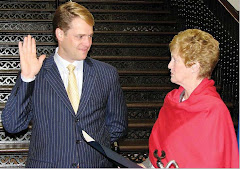
McCoy Sworn in as Vernon Mayor
Jason McCoy was sworn in as mayor on Nov. 8 2907
by Conn. Gov. M. Jodi Rell. He officially takes office on Nov. 12.
jason mccoy
jason mccoy
mccoy for mayor
jason mccoy
energy
news
McCoy Sworn in as Vernon Mayor
Jason McCoy was sworn in as mayor on Nov. 8 2907
by Conn. Gov. M. Jodi Rell. He officially takes office on Nov. 12.
jason mccoyjason mccoymccoy for mayorjason mccoyenergynews
May 17, 2009
Connecticut State House Voted to Abolish the Death Penalty
Tolland County News
State House Votes To Abolish Death PenaltyHouse Would End Death Penalty; Rell Vows To Keep It
The state House of Representatives voted to abolish the death penalty on Wednesday and instead impose life in prison without the possibility of release.The historic vote, 90-56, came at about 7:45 p.m. after more than five hours of passionate debate.
Connecticut (CT) Poll * November 7, 2007 * Connecticut Voters Support Death Penalty - Quinnipiac University – Hamden, Connecticut
State House Votes To Abolish Death PenaltyHouse Would End Death Penalty; Rell Vows To Keep It
The state House of Representatives voted to abolish the death penalty on Wednesday and instead impose life in prison without the possibility of release.The historic vote, 90-56, came at about 7:45 p.m. after more than five hours of passionate debate.
Connecticut (CT) Poll * November 7, 2007 * Connecticut Voters Support Death Penalty - Quinnipiac University – Hamden, Connecticut
May 16, 2009
Tolland County News: Town Council Sets 28.42-Mill Tax Rate -- Courant.com
Tolland County News: Town Council Sets 28.42-Mill Tax Rate -- Courant.com
VERNON – - On Saturday Town of Vernon voters' cast their votes passing the Town's $76 million budget. Voting tally was 1707 in favor to 505 against passing the proposed 2009-2010 Budget. Tuesday the Vernon Town Council met during a special meeting and set the tax rate for the town at 28.42 mills. This is the final year of a three-year phase-in of the town's 2006 revaluation. The tax rate, set with unanimous vote, with Republican Deputy Mayor Brian Motola proposing the motion and Democrat Marie Herbst seconding the motion. The tax rate will be in effect from July 1 to June 30, 2010.
jason mccoy
VERNON – - On Saturday Town of Vernon voters' cast their votes passing the Town's $76 million budget. Voting tally was 1707 in favor to 505 against passing the proposed 2009-2010 Budget. Tuesday the Vernon Town Council met during a special meeting and set the tax rate for the town at 28.42 mills. This is the final year of a three-year phase-in of the town's 2006 revaluation. The tax rate, set with unanimous vote, with Republican Deputy Mayor Brian Motola proposing the motion and Democrat Marie Herbst seconding the motion. The tax rate will be in effect from July 1 to June 30, 2010.
jason mccoy
Jason Mccoy — Blogs, Pictures, and more on WordPress
Jason Mccoy — Blogs, Pictures, and more on WordPress
Vernon CT Budget Passes; 2009-2010
Vernon, CT May 10, 2009 Vernon Town Council Budget passes on the first referendum vote.
Vernon CT Budget Passes; 2009-2010
Vernon, CT May 10, 2009 Vernon Town Council Budget passes on the first referendum vote.
May 12, 2009
Earth Day 2009
VALLEY FALLS-VERNON
CENTRAL PARK-ROCKVILLE
Vernon — 05/12/2009 Reminder News
Scouts and teens honored by town for Earth Day efforts
BY STEVE SMITH Staff Writer


On Earth Day, April 22, two local groups came out to honor the day, and help the Parks and Recreation Department improve parts of Vernon.
The Lake Street School Cub Scouts Pack #221 went to Valley Falls Park and removed invasive plant species in the park. The Scouts were honored at last week’s town council meeting and given a certificate of appreciation by Mayor Jason McCoy.
The scouts were directed and educated by Greenway Volunteer George Arthur and Friends of Valley Falls President Ginny Gingras. Arthur and Gingras also took time to teach the Cub Scouts about invasive species and the danger they are. When McCoy asked the Scouts what invasive plants were, one Cub replied, “plants that aren’t native to this part of the country.”
“That’s a wonderful thing you did,” McCoy told the Scouts. “We want to thank you guys for working so hard. You have made a difference for everybody in the community.”
A group of Vernon Teen Center members , led by Parks Recreation Supervisor Amy Locandro, planted flowers at Central Park and around Cogswell Fountain in Rockville. They cleaned the area in front of the Town Hall, and weeded the garden areas. The teens included Ashley, Taylor, Alexis, Meagan, Jamill and Nicole. Other volunteers that helped in Rockville were Bryan Flint, Roberta Babcock, Bob Babcock and Danielle Krajewski.
The teens were also honored at the town council meeting with a certificate of appreciation. “I want to thank you for all the work you’ve done,” McCoy told the teens. “The park looks awesome .” Parks and Rec. staff said they send special thanks to all volunteers.
CENTRAL PARK-ROCKVILLE
Vernon — 05/12/2009 Reminder News
Scouts and teens honored by town for Earth Day efforts
BY STEVE SMITH Staff Writer


On Earth Day, April 22, two local groups came out to honor the day, and help the Parks and Recreation Department improve parts of Vernon.
The Lake Street School Cub Scouts Pack #221 went to Valley Falls Park and removed invasive plant species in the park. The Scouts were honored at last week’s town council meeting and given a certificate of appreciation by Mayor Jason McCoy.
The scouts were directed and educated by Greenway Volunteer George Arthur and Friends of Valley Falls President Ginny Gingras. Arthur and Gingras also took time to teach the Cub Scouts about invasive species and the danger they are. When McCoy asked the Scouts what invasive plants were, one Cub replied, “plants that aren’t native to this part of the country.”
“That’s a wonderful thing you did,” McCoy told the Scouts. “We want to thank you guys for working so hard. You have made a difference for everybody in the community.”
A group of Vernon Teen Center members , led by Parks Recreation Supervisor Amy Locandro, planted flowers at Central Park and around Cogswell Fountain in Rockville. They cleaned the area in front of the Town Hall, and weeded the garden areas. The teens included Ashley, Taylor, Alexis, Meagan, Jamill and Nicole. Other volunteers that helped in Rockville were Bryan Flint, Roberta Babcock, Bob Babcock and Danielle Krajewski.
The teens were also honored at the town council meeting with a certificate of appreciation. “I want to thank you for all the work you’ve done,” McCoy told the teens. “The park looks awesome .” Parks and Rec. staff said they send special thanks to all volunteers.
May 6, 2009
May 9, 2009 Vernon Budget Referendum Slated Saturday
Tolland County News: May 9, 2009 Vernon Budget Referendum Slated Saturday
VERNON - Residents will have their say on a proposed $76 million budget at a referendum Saturday.The $76,089,866 budget represents an increase of 0.85 percent over the current $75.5 million spending plan. On May, 9, 2009 voting will take place at Center 375, located at 375 Hartford Turnpike, from 6 a.m. to 8 p.m. Absentee ballots are available at the town clerk's office in town hall located at 14 Park Place.
The board is expected to provide details on those cuts later this month.The entire budget can be viewed at www.vernon-ct.gov/budgets.html.
VERNON - Residents will have their say on a proposed $76 million budget at a referendum Saturday.The $76,089,866 budget represents an increase of 0.85 percent over the current $75.5 million spending plan. On May, 9, 2009 voting will take place at Center 375, located at 375 Hartford Turnpike, from 6 a.m. to 8 p.m. Absentee ballots are available at the town clerk's office in town hall located at 14 Park Place.
The board is expected to provide details on those cuts later this month.The entire budget can be viewed at www.vernon-ct.gov/budgets.html.
May 3, 2009


May 1, 2009
Mayor Jason McCoy Vernon, Mayor John Picard West Haven Discuss State Aid
Vernon Mayor Jason McCoy and West Haven Mayor John Picard discuss the fight cities and towns are going through for state aid.
WFSB Face the State
Connecticut Politics headlines, podcasts, news, video, pictures
Clip Syndicate Video
jason mccoy
WFSB Face the State
Connecticut Politics headlines, podcasts, news, video, pictures
Clip Syndicate Video
jason mccoy
April 15, 2009
Town Budget To Go Before Voters
Vernon Budget To Go Before Voters
The Hartford Courant
April 15, 2009
VERNON
Vernon -Residents will have their say on a proposed $76 million budget at a town meeting April 28.The town council approved the $76 million budget for the 2009-10 fiscal year late last week by a 7-3 vote, sending it to the annual meeting.
The $76,089,866 budget represents an increase of 0.85 percent over the current $75.5 million spending plan. The proposed budget is an increase of $638,264.General government increased $380,696, or 1.52 percent, to $25,468,149. The board of education budget increased 0.3 percent, to $45,835,932, after Mayor Jason L. McCoy reduced $300,000 from the board. The board will be meeting over the next few weeks to determine exactly where those cuts will be made.
This is the final year of a three-year phase-in of the town's 2006 revaluation.
Under the proposed budget, the tax rate or mill rate is reduced by just over 6%.
The annual town meeting, scheduled for 7:30 p.m. in the Rockville High School auditorium, will determine the budget unless residents petition for a referendum. Last year, the budget passed on the first try.
http://www.courant.com/news/local/ec/hc-vernon-budget-brf,0,2259563.story
http://www.wfsb.com/video/19167063/
jason mccoy
The Hartford Courant
April 15, 2009
VERNON
Vernon -Residents will have their say on a proposed $76 million budget at a town meeting April 28.The town council approved the $76 million budget for the 2009-10 fiscal year late last week by a 7-3 vote, sending it to the annual meeting.
The $76,089,866 budget represents an increase of 0.85 percent over the current $75.5 million spending plan. The proposed budget is an increase of $638,264.General government increased $380,696, or 1.52 percent, to $25,468,149. The board of education budget increased 0.3 percent, to $45,835,932, after Mayor Jason L. McCoy reduced $300,000 from the board. The board will be meeting over the next few weeks to determine exactly where those cuts will be made.
This is the final year of a three-year phase-in of the town's 2006 revaluation.
Under the proposed budget, the tax rate or mill rate is reduced by just over 6%.
The annual town meeting, scheduled for 7:30 p.m. in the Rockville High School auditorium, will determine the budget unless residents petition for a referendum. Last year, the budget passed on the first try.
http://www.courant.com/news/local/ec/hc-vernon-budget-brf,0,2259563.story
http://www.wfsb.com/video/19167063/
jason mccoy
April 12, 2009
MAYOR MCCOY’S 2009-2010 BUDGET

BY STEVE SMITH Staff Writer ssmith@remindernet .com
Vernon — 03/31/2009- Mayor Jason McCoy has proposed a budget totaling $76,089,866 for the 2009-2010 fiscal year–an increase of .85 percent over last year. The Town's tax rate is reduced by a little more than 6 percent.
The town side of the budget is $25,468,149, with $45,835,932 appropriated for the Board of Education.
“I think it’s a good budget,” McCoy said. “The big issue is that we are down in revenue.” He said adding decreases in non-tax revenue and the state legislative reductions to contributions are the biggest culprit. An estimated total of a $1.2 million decrease, including licenses and permits , records fees, and investment income , is expected. Also, town monies in banks have earned very little, as is true across the country.
McCoy said that the tax collection rate should remain around 98 percent, in spite of some residents being affected by layoffs and other economic factors, and the biggest difference is in motor vehicle taxes, which has been down.
Education Cost Sharing funds are also a concern. Previously, Governor M. Jodi Rell had proposed a decrease in the funding, but the governor’s latest proposal calls for the ECS money to remain at last year’s levels, although the state budget has yet to be finalized, and won’t be before the town’s budget is.
McCoy said Vernon plans for a decrease in that funding, to be safe. “We didn’t take risk factors on that,” he said, “because we didn’t think this was the appropriate year to do it. That’s always a problem. We took it as what we expect it to be.”
McCoy said the Town Council and his staff have worked to reduce the budget as much as possible.
“Tax rates are going down, but not as much as we would have liked,” he said.
In a prepared press release, McCoy wanted to reassure residents that, despite the slow national economy, Vernon “remains stable and affordable.”
The release also states that the budget was prepared with all town departments “understanding our economic challenge, and countering it with resourcefulness and innovation.”
“Our town department heads and I began to take apart the way we budgeted in the past. We went through our past expenditures... we negotiated new terms in our agreements for services, and products, working to lower costs for the essential goods and services that the town delivers to our citizens,” the statement read.
McCoy urges residents to participate in the budget process, particularly at the annual town meeting on April 28, at which a vote will finalize the budget. Anyone who owns property in town, or is a registered voter, will be eligible to vote at that meeting.
Before that meeting, a referendum is possible, by a petition of 200 or more signatures. “I invite everybody to come, ask questions, and participate,” McCoy said. “Give us comments or input. It’s what tells us how to handle things.”
The proposed budget is available on the Town of Vernon’s Web site, http://www.vernon-ct.gov/.
Reminder
The town side of the budget is $25,468,149, with $45,835,932 appropriated for the Board of Education.
“I think it’s a good budget,” McCoy said. “The big issue is that we are down in revenue.” He said adding decreases in non-tax revenue and the state legislative reductions to contributions are the biggest culprit. An estimated total of a $1.2 million decrease, including licenses and permits , records fees, and investment income , is expected. Also, town monies in banks have earned very little, as is true across the country.
McCoy said that the tax collection rate should remain around 98 percent, in spite of some residents being affected by layoffs and other economic factors, and the biggest difference is in motor vehicle taxes, which has been down.
Education Cost Sharing funds are also a concern. Previously, Governor M. Jodi Rell had proposed a decrease in the funding, but the governor’s latest proposal calls for the ECS money to remain at last year’s levels, although the state budget has yet to be finalized, and won’t be before the town’s budget is.
McCoy said Vernon plans for a decrease in that funding, to be safe. “We didn’t take risk factors on that,” he said, “because we didn’t think this was the appropriate year to do it. That’s always a problem. We took it as what we expect it to be.”
McCoy said the Town Council and his staff have worked to reduce the budget as much as possible.
“Tax rates are going down, but not as much as we would have liked,” he said.
In a prepared press release, McCoy wanted to reassure residents that, despite the slow national economy, Vernon “remains stable and affordable.”
The release also states that the budget was prepared with all town departments “understanding our economic challenge, and countering it with resourcefulness and innovation.”
“Our town department heads and I began to take apart the way we budgeted in the past. We went through our past expenditures... we negotiated new terms in our agreements for services, and products, working to lower costs for the essential goods and services that the town delivers to our citizens,” the statement read.
McCoy urges residents to participate in the budget process, particularly at the annual town meeting on April 28, at which a vote will finalize the budget. Anyone who owns property in town, or is a registered voter, will be eligible to vote at that meeting.
Before that meeting, a referendum is possible, by a petition of 200 or more signatures. “I invite everybody to come, ask questions, and participate,” McCoy said. “Give us comments or input. It’s what tells us how to handle things.”
The proposed budget is available on the Town of Vernon’s Web site, http://www.vernon-ct.gov/.
Reminder
April 10, 2009
Connecticut Budget Proposal Reduces Town Property Taxes
Legislative Update
Republican plan avoids tax hikes
Republican Budget
Proposal Maintains Town Aid
Finance Provides $100 Million Each
in Infrastructure Aid and Regional Grants
************************************************************
Republican’s New Budget Proposal Maintains State Aid Levels
The Republican Legislative leaders unveiled a new state budget proposal that, among other things, maintains state aid to towns and cities.
Republican Budget Alternative
House and Senate Republican leaders today released a “no tax increase” budget proposal that provides no cuts for towns and cities from general fund revenues (portions of grants that have been funded using state surplus fund for this fiscal year would not be funded).The Republican Plan increases State employee’s prescription payments from $3 to $10. Republicans have proposed several non-tax and non-service fee revenue initiatives to fund the plan. The Republicans have also put funding back for several public safety and public health initiative like the health district funding and bridge funding.
Bond Package
A proposed state bond package that would:
• Establish a new $100 million “municipal block grant” for FY 09-10 that would provide municipalities with$40 million according to LoCIP, $40 million according to TAR and $20 million according to unemployment rates. This block grant would be in lieu of the existing LoCIP and TAR programs. It would provide $50 for LoCIP in FY 10-11. The uses of the money would be more flexible for municipalities than under either LoCIP or TAR;
• Establish a new $50 million “regional block grant” to encourage municipal cooperation (FY 09-10). This is the Committee’s alternative to Governor Rell’s regional incentive proposals (also $50 million). See below for a related funding proposal;
• Provide $10 million in each year of the biennium for STEAP (the Governor had not funded STEAP);
• Reduce proposed bonding below levels recommended by the Governor for the following:
-- Urban Act – no funding (Governor proposed $30 million in each year of the biennium);
-- Clean Water Fund G.O. bonds (used for grants) -- $65 million in FY 09-10, $40 million
in FY 10-11.
The Governor had proposed $90 million in each year;
-- Clean Water Fund revenue bonds (used for loans)
-- $80 million in each year (Governor had proposed $175 million each year);
-- Aid for Municipal Plans of Conservation and Development—no funding
(Governor had proposed $500,000 each year).
Additional Regional Incentives
A bill (a rewritten version of HB 6561), which would dedicate $50 million from the state sales tax revenue to fund regional capital costs and services or other cost-saving programs. Combined with the bond fund described above, the Committee would thus provide $100 million in regional incentives.
Other Actions
A favorable reported on:
• HB 6559, a CCM proposal that would earmark future growth in state Indian gaming revenues for (a) PILOTsand (b) Pequot-Mohegan grants, and
• SB 1111 which authorizes school construction grants.
The Committee appears to have maintained the Governor’s provision that would limit school construction change orders to 5% of a project’s cost.
ccm-ct.org
Republican plan avoids tax hikes
Republican Budget
Proposal Maintains Town Aid
Finance Provides $100 Million Each
in Infrastructure Aid and Regional Grants
************************************************************
Republican’s New Budget Proposal Maintains State Aid Levels
The Republican Legislative leaders unveiled a new state budget proposal that, among other things, maintains state aid to towns and cities.
Republican Budget Alternative
House and Senate Republican leaders today released a “no tax increase” budget proposal that provides no cuts for towns and cities from general fund revenues (portions of grants that have been funded using state surplus fund for this fiscal year would not be funded).The Republican Plan increases State employee’s prescription payments from $3 to $10. Republicans have proposed several non-tax and non-service fee revenue initiatives to fund the plan. The Republicans have also put funding back for several public safety and public health initiative like the health district funding and bridge funding.
Bond Package
A proposed state bond package that would:
• Establish a new $100 million “municipal block grant” for FY 09-10 that would provide municipalities with$40 million according to LoCIP, $40 million according to TAR and $20 million according to unemployment rates. This block grant would be in lieu of the existing LoCIP and TAR programs. It would provide $50 for LoCIP in FY 10-11. The uses of the money would be more flexible for municipalities than under either LoCIP or TAR;
• Establish a new $50 million “regional block grant” to encourage municipal cooperation (FY 09-10). This is the Committee’s alternative to Governor Rell’s regional incentive proposals (also $50 million). See below for a related funding proposal;
• Provide $10 million in each year of the biennium for STEAP (the Governor had not funded STEAP);
• Reduce proposed bonding below levels recommended by the Governor for the following:
-- Urban Act – no funding (Governor proposed $30 million in each year of the biennium);
-- Clean Water Fund G.O. bonds (used for grants) -- $65 million in FY 09-10, $40 million
in FY 10-11.
The Governor had proposed $90 million in each year;
-- Clean Water Fund revenue bonds (used for loans)
-- $80 million in each year (Governor had proposed $175 million each year);
-- Aid for Municipal Plans of Conservation and Development—no funding
(Governor had proposed $500,000 each year).
Additional Regional Incentives
A bill (a rewritten version of HB 6561), which would dedicate $50 million from the state sales tax revenue to fund regional capital costs and services or other cost-saving programs. Combined with the bond fund described above, the Committee would thus provide $100 million in regional incentives.
Other Actions
A favorable reported on:
• HB 6559, a CCM proposal that would earmark future growth in state Indian gaming revenues for (a) PILOTsand (b) Pequot-Mohegan grants, and
• SB 1111 which authorizes school construction grants.
The Committee appears to have maintained the Governor’s provision that would limit school construction change orders to 5% of a project’s cost.
ccm-ct.org
March 1, 2009
February 16, 2009
October 12, 2008
CONNECTICUT EVENT AND SHOW INFORMATION - CT-N - Connecticut Supreme Court, legislation, politics, programs, Hartford
CONNECTICUT EVENT AND SHOW INFORMATION - CT-N - Connecticut Supreme Court, legislation, politics, programs, Hartford: "U.S. REP. COURTNEY FORUM ON THE MORTGAGE CRISIS AND THE FEDERAL HOUSING BILL
Watch
mms://ctnv1.ctn.state.ct.us/C/courtney_forum_8-14-08.wmv
Host Group
CONGRESSMAN COURTNEY Event Location VERNON, CT"
http://www.ct-n.com/webstream.asp?odID=3758&odTitle=U.S.%20Rep.%20Courtney%20Forum%20on%20the%20Mortgage%20Crisis%20and%20the%20Federal%20Housing%20Bill
Watch
mms://ctnv1.ctn.state.ct.us/C/courtney_forum_8-14-08.wmv
Host Group
CONGRESSMAN COURTNEY Event Location VERNON, CT"
http://www.ct-n.com/webstream.asp?odID=3758&odTitle=U.S.%20Rep.%20Courtney%20Forum%20on%20the%20Mortgage%20Crisis%20and%20the%20Federal%20Housing%20Bill
May 14, 2008
Dead people voting - Ballotpedia
Dead people voting - Ballotpedia: "Connecticut
Election officials in Connecticut removed names from the state's voter rolls after journalism students found that thousands of dead people were still registered to vote. After conducting their own investigation, students at the University of Connecticut said this spring that about 8,500 dead people remained registered to vote. The Connecticut Secretary of State worked with local registrars to remove more than 5,200 of those names from the rolls. The deaths of about 1,300 people on the students' list could not be confirmed, though they were moved to the 'inactive' list. But 45 of the 'dead' voters were actually alive. That highlights the balancing act undertaken by state officials, who recognize the potential for fraud when dead people remain registered to vote, but must also ensure that eligible citizens are able to exercise their right to vote.[3]"
Courant.com
Dead Voters? Probe Finds Errors In Records
By MARCEL DUFRESNE
Special to The Courant
April 20, 2008
Jane M. Drury, homemaker, mother, grandmother and great-grandmother, spent most of her life in Staten Island, N.Y, but moved to Stonington in 1992 to live with her daughter. That October, she registered to vote there.State records show Drury never actually voted in Stonington before her death in 2000 in a Groton nursing home at age 97. But the same records say she did vote in Stonington once since then — in a 2007 budget referendum.That recorded vote, seven years after her death, puts Drury on a list of more than 300 people across Connecticut who appear to have voted from the grave in elections dating to 1994, a two-month investigation of voting records by journalism students at the University of Connecticut has found.The mysterious voters were identified by matching a statewide database of 2 million registered voters and their voting histories with two separate computer lists of dead people maintained by the state Department of Public Health and the federal Social Security Administration.Following up on the matches, UConn students examined the records of nearly 100 of the suspect voters at 10 town and city halls among those with the most cases. Guilford led the state with 39, followed by West Hartford (17), Enfield (15), Stonington (13) and Norwalk (11).Some people appeared to have voted frequently after death, the research found. In Hebron, for example, records show one man voted 17 times after he died in 1992.The investigation also identified more than 8,500 people listed as dead who are still registered to vote in Connecticut, most long after their deaths. In Hamden, one woman remained a registered voter although she died in 1979.Although the investigation found no evidence of deliberate fraud, it uncovered numerous errors in voting and registration records kept by local registrars, and highlights weaknesses in a state voter database established in the mid-1990s, ostensibly to prevent fraud and duplicate voting.State elections officials and others concede that the findings reveal flaws in the voting system and expose its vulnerability to potential abuse."I understood [dead voters] as a myth," said Joan M. Andrews, enforcement director for the State Elections Enforcement Commission, which investigates elections and campaign finance irregularities. "People make jokes about dead people voting but we never thought things like that could actually happen."Andrews said she plans to bring the UConn findings to the full commission to determine whether further investigation is warranted.
Trouble In Town Hall
Michael Kozik, managing attorney for the secretary of the state's office, which is responsible for the state database, said he was most troubled by the thousands of dead people still registered to vote. "Clearly this is an issue that we need to look at," he said.All but nine of Connecticut's 169 municipalities listed dead people on active voter rolls. At least 100 cases were identified in each of 28 cities and towns. In New Haven alone, 370 dead people were still registered; in Enfield there were 321; in West Haven, 310; in Hartford, 298; and in Bridgeport, 293.The UConn investigation also found instances of people who were not registered yet were able to vote — under a dead person's name — along with frequent discrepancies between the state data and paper voting records at local town halls.The potential for fraud is most serious in municipal elections, when officials are not required to check photo identification at the polls and voters need only sign a statement attesting to their identity.The UConn findings highlight two nagging problems facing officials trying to keep accurate voting records. First is the informal and antiquated ways many local registrars remove dead people from voter rolls. Second is the potential for clerical errors when registrars transfer information from paper voting lists to the state database, especially in the rush to update by the two-day, post-election deadline.Many of those interviewed blame a locally based election system that has not changed much in decades. In many towns, elections and voter registration are run by part-time registrars who are paid little, have limited resources, and may resist the growing role of computers in elections.The UConn findings are disturbing but not surprising, said Andy Sauer, executive director of Connecticut Common Cause, a public-interest group that lobbies for election reform. He blamed many of the system's problems on politically appointed local registrars using outdated methods of running elections and keeping records. Each town has two registrars, one Democrat and one Republican."You need to take the election administration out of the hands of a politician and into the hands of a state administration," he said, a solution many in the system might consider unrealistic.
Figuring Out Who Died
Jane Drury's vote in a May 2007 Stonington referendum, first detected in the state data, was later confirmed on a paper check-off list at the town hall showing her name crossed off with a straight line. By all official records, Drury voted seven years after she had died."Somebody goofed, obviously," said Jane Gumpel, Drury's daughter. "I don't know how that could happen."Louise Brown, a Stonington registrar of voters, was one of several municipal registrars who initially expressed skepticism when informed that dead people appeared to be voting in their town. Brown was shown a list of 13 dead people who state records indicated had voted a total of 38 times in Stonington since 2001. A quick check of several names confirmed the problems, and Brown began tracking down several suspicious cases. Registrars in other towns responded similarly.Around the state, UConn students identified a variety of explanations for why people seemed to be voting after death. The most common was clerical errors made while checking off voters' names at the polls or entering votes into the state database.In other cases, someone with the same name, sometimes a relative who was not registered, actually cast the vote. Other times, a living person might have been mistakenly taken off the rolls when someone with the same name died. Votes in both scenarios were erroneously credited to a dead person.Connecticut is one of many states with no formal system for notifying registrars when someone dies. Death certificates are sent to the city or town where the death occurs, not necessarily where people lived, even if they lived in the same town all their lives. When someone dies in a hospital or nursing home in another town or an adjacent state, the death certificate may never come to the registrars' attention.Registrars tend to rely on newspaper obituaries, relatives, or word of mouth to learn of someone's death, many officials said.Even then, registrars are advised to be extremely cautious about purging dead people from voter rolls, said George Cody, president of the Registrar of Voters Association of Connecticut and New Canaan's Democratic registrar. They must see documentary proof, such as the death certificate or a published obituary, before removing someone's name.
A Confusion Of Names
The possibility that two or more people in the same town have the same name makes registrars especially cautious about removing a voter, Cody said.Identical names seem to explain the case of George E. Gagnon, a retired auto body repairman who, records indicate, voted seven times in East Hartford after his death on June 15, 1991, with all of the votes coming after 2001. Gagnon, born in 1918, had moved to neighboring Manchester in 1952, long before he died.It turns out that a different George E. Gagnon, a retired truck driver born in 1921, is very much alive, living and voting regularly in East Hartford."A lot of dead people vote in this state," the living Gagnon joked after finding out a different George Gagnon had been credited with his votes. "I'm still alive and if somebody makes a mistake, that's not my fault."The explanation: Someone at the East Hartford registrars office entered the living Gagnon into the state database using the birth date on the other Gagnon's registration card, even though the latter had left town 50 years earlier. As a result, the living Gagnon was identified as dead in the computer match and the dead Gagnon appeared to have cast multiple votes in East Hartford.While registrars are reluctant to cancel a voter's registration without physical proof of death, they are under no obligation to seek out such proof, even when it might be filed elsewhere in their own town hall. UConn students found numerous cases in which death and burial certificates on file in one town office did not find their way to registrars in the same building.State records show that Carmella Vella, an Italian immigrant who settled in Enfield in 1913, voted there in 2005 and 2006. But Vella died across the state border in a Springfield hospital in 1998. The votes, it turned out, stem from clerical errors.Neighboring towns are supposed to forward death certificates to a dead person's hometown, but that doesn't always happen, said Enfield's recently retired Republican registrar, Vaughan Vanderscoff.But proof of Vella's death — a burial certificate for an Enfield cemetery — is on file in the town clerk's office down the hall from the registrar.Vella's daughter-in-law, Barbara Vella, said she doesn't understand why her husband's mother was still registered."I've told them multiple times to take her off the list," Vella said. "She is certainly deceased."Kozik, of the secretary of the state's office, concedes: "There should be a better system of getting the death information to the registrars in a timely fashion. But I'm not exactly sure how we would do that."
How Mistakes Are Made
In theory, at least, there is a simple way to supply registrars with accurate death information. The state Office of Vital Records maintains a database of death certificates in Connecticut — called the "consolidated master death file" — dating to 1949. It is the same database used by UConn students to identify votes attributed to dead people.A 2005 report to Congress by the Government Accountability Office recommended that states share computerized death certificate data with towns to accurately purge dead people from voter rolls. Georgia began doing so in 2003, after a newspaper investigation revealed some 15,000 dead people still registered in that state.But Kozik, who was not familiar with the GAO recommendation, cautioned against using computer matching alone to remove voters' names."I would always be reluctant to have computers automatically disenfranchising people to vote," Kozik said. "Before someone is actually taken off the list I would want some kind of human intervention and judgment involved."Many votes credited to dead people appeared to result from clerical error, UConn students found.In Southington, the state data show that 10 dead people voted, most in November 2000. But a check of paper records showed none actually had voted."The errors had to occur when we were typing the names of people who voted into the computer," said Carol Sheffs, deputy registrar in Southington. "Everyone is in a rush to see who voted. You do it fast and you don't have time to check over your work. That's how mistakes are made."Local officials are well aware of the system's weaknesses, said Carole Young-Kleinfeld, a deputy registrar in Wilton and a spokeswoman for the Connecticut League of Women Voters. "The possibility of human error at election time is very real. Checkers at the polls mistakenly cross off sons instead of fathers, and vice versa, or cross off neighbors who have similar names."Kozik downplayed the significance of voter history errors. Those records are kept mostly as a convenience to political parties, which use the information to target frequent voters, he said.But Andrews, of the elections enforcement commission, said a state record that shows who voted and who did not should be accurate. Especially troubling, she said, are those dead people whose votes are confirmed by check-off lists, which can only result from multiple errors in the process.She described most problems as "systematic" and blamed them on "a lack of uniformity" at the local level. Municipalities are supposed to follow the same state-mandated procedures, she said, "but when you go out to a town, you find that they aren't."
Forced To Go Online
UConn students found 10 cases in which an unregistered person was able to vote under a dead person's name. In most cases, the person was a son or daughter with the same first, last and middle name, and sometimes even the same address, but not the same date of birth.One such case involved Donald R. Tichy Jr., a 1981 graduate of the University of Hartford, who died of cancer in 1992 at the age of 33. Votes attributed to Tichy in 2005 and 2006 were actually cast by his father, Donald R. Tichy Sr. The only registration card under the name of Donald Tichy lists the son's identification information, plus the suffix "Jr." added, in pencil, after the name."I've been voting illegally, is what you're telling me," a surprised Tichy Sr. said. He vowed to straighten out the matter.The secretary of the state's office created the voter database in the mid-1990s to help detect fraud and duplicate registrations, years ahead of the 2002 federal Help America Vote Act that required every state to keep such a database.Participation by local registrars was voluntary at first — some towns resisted the move to computerization — but the state legislature required every town to go online by September 2003.Calling the database "a work in progress," Andrews noted that some towns had to be forced to comply. In Norwalk, two registrars were fined $1,500 each for failing to complete their portion of the registry on time and for not using it in the November 2004 election.State officials say they have known of problems with the database since 2005, when the elections enforcement commission tested the system, looking for people who might have voted twice in the 2004 national election, Andrews said.The agency initially was surprised to find more than 400 people who apparently voted more than once. But after spending more than a year investigating each case, the agency found no evidence of duplicate voting."One by one, there turned out to be some sort of explanation for them." Andrews said. The investigation found many of the same causes identified in the UConn investigation.Some officials suggest that better training for registrars would improve the system. The secretary of the state's office and the registrars association have been conducting "a very intensive training program" for registrars for nearly two years, especially those newly elected, said Cody, the registrars association president.But he conceded that some registrars, especially those in smaller towns, whom he described as "woefully underpaid and understaffed," may be slow to adapt."We can lead them to water," Cody said, "but we can't make them drink."
Copyright © 2008,
The Hartford Courant
Election officials in Connecticut removed names from the state's voter rolls after journalism students found that thousands of dead people were still registered to vote. After conducting their own investigation, students at the University of Connecticut said this spring that about 8,500 dead people remained registered to vote. The Connecticut Secretary of State worked with local registrars to remove more than 5,200 of those names from the rolls. The deaths of about 1,300 people on the students' list could not be confirmed, though they were moved to the 'inactive' list. But 45 of the 'dead' voters were actually alive. That highlights the balancing act undertaken by state officials, who recognize the potential for fraud when dead people remain registered to vote, but must also ensure that eligible citizens are able to exercise their right to vote.[3]"
Courant.com
Dead Voters? Probe Finds Errors In Records
By MARCEL DUFRESNE
Special to The Courant
April 20, 2008
Jane M. Drury, homemaker, mother, grandmother and great-grandmother, spent most of her life in Staten Island, N.Y, but moved to Stonington in 1992 to live with her daughter. That October, she registered to vote there.State records show Drury never actually voted in Stonington before her death in 2000 in a Groton nursing home at age 97. But the same records say she did vote in Stonington once since then — in a 2007 budget referendum.That recorded vote, seven years after her death, puts Drury on a list of more than 300 people across Connecticut who appear to have voted from the grave in elections dating to 1994, a two-month investigation of voting records by journalism students at the University of Connecticut has found.The mysterious voters were identified by matching a statewide database of 2 million registered voters and their voting histories with two separate computer lists of dead people maintained by the state Department of Public Health and the federal Social Security Administration.Following up on the matches, UConn students examined the records of nearly 100 of the suspect voters at 10 town and city halls among those with the most cases. Guilford led the state with 39, followed by West Hartford (17), Enfield (15), Stonington (13) and Norwalk (11).Some people appeared to have voted frequently after death, the research found. In Hebron, for example, records show one man voted 17 times after he died in 1992.The investigation also identified more than 8,500 people listed as dead who are still registered to vote in Connecticut, most long after their deaths. In Hamden, one woman remained a registered voter although she died in 1979.Although the investigation found no evidence of deliberate fraud, it uncovered numerous errors in voting and registration records kept by local registrars, and highlights weaknesses in a state voter database established in the mid-1990s, ostensibly to prevent fraud and duplicate voting.State elections officials and others concede that the findings reveal flaws in the voting system and expose its vulnerability to potential abuse."I understood [dead voters] as a myth," said Joan M. Andrews, enforcement director for the State Elections Enforcement Commission, which investigates elections and campaign finance irregularities. "People make jokes about dead people voting but we never thought things like that could actually happen."Andrews said she plans to bring the UConn findings to the full commission to determine whether further investigation is warranted.
Trouble In Town Hall
Michael Kozik, managing attorney for the secretary of the state's office, which is responsible for the state database, said he was most troubled by the thousands of dead people still registered to vote. "Clearly this is an issue that we need to look at," he said.All but nine of Connecticut's 169 municipalities listed dead people on active voter rolls. At least 100 cases were identified in each of 28 cities and towns. In New Haven alone, 370 dead people were still registered; in Enfield there were 321; in West Haven, 310; in Hartford, 298; and in Bridgeport, 293.The UConn investigation also found instances of people who were not registered yet were able to vote — under a dead person's name — along with frequent discrepancies between the state data and paper voting records at local town halls.The potential for fraud is most serious in municipal elections, when officials are not required to check photo identification at the polls and voters need only sign a statement attesting to their identity.The UConn findings highlight two nagging problems facing officials trying to keep accurate voting records. First is the informal and antiquated ways many local registrars remove dead people from voter rolls. Second is the potential for clerical errors when registrars transfer information from paper voting lists to the state database, especially in the rush to update by the two-day, post-election deadline.Many of those interviewed blame a locally based election system that has not changed much in decades. In many towns, elections and voter registration are run by part-time registrars who are paid little, have limited resources, and may resist the growing role of computers in elections.The UConn findings are disturbing but not surprising, said Andy Sauer, executive director of Connecticut Common Cause, a public-interest group that lobbies for election reform. He blamed many of the system's problems on politically appointed local registrars using outdated methods of running elections and keeping records. Each town has two registrars, one Democrat and one Republican."You need to take the election administration out of the hands of a politician and into the hands of a state administration," he said, a solution many in the system might consider unrealistic.
Figuring Out Who Died
Jane Drury's vote in a May 2007 Stonington referendum, first detected in the state data, was later confirmed on a paper check-off list at the town hall showing her name crossed off with a straight line. By all official records, Drury voted seven years after she had died."Somebody goofed, obviously," said Jane Gumpel, Drury's daughter. "I don't know how that could happen."Louise Brown, a Stonington registrar of voters, was one of several municipal registrars who initially expressed skepticism when informed that dead people appeared to be voting in their town. Brown was shown a list of 13 dead people who state records indicated had voted a total of 38 times in Stonington since 2001. A quick check of several names confirmed the problems, and Brown began tracking down several suspicious cases. Registrars in other towns responded similarly.Around the state, UConn students identified a variety of explanations for why people seemed to be voting after death. The most common was clerical errors made while checking off voters' names at the polls or entering votes into the state database.In other cases, someone with the same name, sometimes a relative who was not registered, actually cast the vote. Other times, a living person might have been mistakenly taken off the rolls when someone with the same name died. Votes in both scenarios were erroneously credited to a dead person.Connecticut is one of many states with no formal system for notifying registrars when someone dies. Death certificates are sent to the city or town where the death occurs, not necessarily where people lived, even if they lived in the same town all their lives. When someone dies in a hospital or nursing home in another town or an adjacent state, the death certificate may never come to the registrars' attention.Registrars tend to rely on newspaper obituaries, relatives, or word of mouth to learn of someone's death, many officials said.Even then, registrars are advised to be extremely cautious about purging dead people from voter rolls, said George Cody, president of the Registrar of Voters Association of Connecticut and New Canaan's Democratic registrar. They must see documentary proof, such as the death certificate or a published obituary, before removing someone's name.
A Confusion Of Names
The possibility that two or more people in the same town have the same name makes registrars especially cautious about removing a voter, Cody said.Identical names seem to explain the case of George E. Gagnon, a retired auto body repairman who, records indicate, voted seven times in East Hartford after his death on June 15, 1991, with all of the votes coming after 2001. Gagnon, born in 1918, had moved to neighboring Manchester in 1952, long before he died.It turns out that a different George E. Gagnon, a retired truck driver born in 1921, is very much alive, living and voting regularly in East Hartford."A lot of dead people vote in this state," the living Gagnon joked after finding out a different George Gagnon had been credited with his votes. "I'm still alive and if somebody makes a mistake, that's not my fault."The explanation: Someone at the East Hartford registrars office entered the living Gagnon into the state database using the birth date on the other Gagnon's registration card, even though the latter had left town 50 years earlier. As a result, the living Gagnon was identified as dead in the computer match and the dead Gagnon appeared to have cast multiple votes in East Hartford.While registrars are reluctant to cancel a voter's registration without physical proof of death, they are under no obligation to seek out such proof, even when it might be filed elsewhere in their own town hall. UConn students found numerous cases in which death and burial certificates on file in one town office did not find their way to registrars in the same building.State records show that Carmella Vella, an Italian immigrant who settled in Enfield in 1913, voted there in 2005 and 2006. But Vella died across the state border in a Springfield hospital in 1998. The votes, it turned out, stem from clerical errors.Neighboring towns are supposed to forward death certificates to a dead person's hometown, but that doesn't always happen, said Enfield's recently retired Republican registrar, Vaughan Vanderscoff.But proof of Vella's death — a burial certificate for an Enfield cemetery — is on file in the town clerk's office down the hall from the registrar.Vella's daughter-in-law, Barbara Vella, said she doesn't understand why her husband's mother was still registered."I've told them multiple times to take her off the list," Vella said. "She is certainly deceased."Kozik, of the secretary of the state's office, concedes: "There should be a better system of getting the death information to the registrars in a timely fashion. But I'm not exactly sure how we would do that."
How Mistakes Are Made
In theory, at least, there is a simple way to supply registrars with accurate death information. The state Office of Vital Records maintains a database of death certificates in Connecticut — called the "consolidated master death file" — dating to 1949. It is the same database used by UConn students to identify votes attributed to dead people.A 2005 report to Congress by the Government Accountability Office recommended that states share computerized death certificate data with towns to accurately purge dead people from voter rolls. Georgia began doing so in 2003, after a newspaper investigation revealed some 15,000 dead people still registered in that state.But Kozik, who was not familiar with the GAO recommendation, cautioned against using computer matching alone to remove voters' names."I would always be reluctant to have computers automatically disenfranchising people to vote," Kozik said. "Before someone is actually taken off the list I would want some kind of human intervention and judgment involved."Many votes credited to dead people appeared to result from clerical error, UConn students found.In Southington, the state data show that 10 dead people voted, most in November 2000. But a check of paper records showed none actually had voted."The errors had to occur when we were typing the names of people who voted into the computer," said Carol Sheffs, deputy registrar in Southington. "Everyone is in a rush to see who voted. You do it fast and you don't have time to check over your work. That's how mistakes are made."Local officials are well aware of the system's weaknesses, said Carole Young-Kleinfeld, a deputy registrar in Wilton and a spokeswoman for the Connecticut League of Women Voters. "The possibility of human error at election time is very real. Checkers at the polls mistakenly cross off sons instead of fathers, and vice versa, or cross off neighbors who have similar names."Kozik downplayed the significance of voter history errors. Those records are kept mostly as a convenience to political parties, which use the information to target frequent voters, he said.But Andrews, of the elections enforcement commission, said a state record that shows who voted and who did not should be accurate. Especially troubling, she said, are those dead people whose votes are confirmed by check-off lists, which can only result from multiple errors in the process.She described most problems as "systematic" and blamed them on "a lack of uniformity" at the local level. Municipalities are supposed to follow the same state-mandated procedures, she said, "but when you go out to a town, you find that they aren't."
Forced To Go Online
UConn students found 10 cases in which an unregistered person was able to vote under a dead person's name. In most cases, the person was a son or daughter with the same first, last and middle name, and sometimes even the same address, but not the same date of birth.One such case involved Donald R. Tichy Jr., a 1981 graduate of the University of Hartford, who died of cancer in 1992 at the age of 33. Votes attributed to Tichy in 2005 and 2006 were actually cast by his father, Donald R. Tichy Sr. The only registration card under the name of Donald Tichy lists the son's identification information, plus the suffix "Jr." added, in pencil, after the name."I've been voting illegally, is what you're telling me," a surprised Tichy Sr. said. He vowed to straighten out the matter.The secretary of the state's office created the voter database in the mid-1990s to help detect fraud and duplicate registrations, years ahead of the 2002 federal Help America Vote Act that required every state to keep such a database.Participation by local registrars was voluntary at first — some towns resisted the move to computerization — but the state legislature required every town to go online by September 2003.Calling the database "a work in progress," Andrews noted that some towns had to be forced to comply. In Norwalk, two registrars were fined $1,500 each for failing to complete their portion of the registry on time and for not using it in the November 2004 election.State officials say they have known of problems with the database since 2005, when the elections enforcement commission tested the system, looking for people who might have voted twice in the 2004 national election, Andrews said.The agency initially was surprised to find more than 400 people who apparently voted more than once. But after spending more than a year investigating each case, the agency found no evidence of duplicate voting."One by one, there turned out to be some sort of explanation for them." Andrews said. The investigation found many of the same causes identified in the UConn investigation.Some officials suggest that better training for registrars would improve the system. The secretary of the state's office and the registrars association have been conducting "a very intensive training program" for registrars for nearly two years, especially those newly elected, said Cody, the registrars association president.But he conceded that some registrars, especially those in smaller towns, whom he described as "woefully underpaid and understaffed," may be slow to adapt."We can lead them to water," Cody said, "but we can't make them drink."
Copyright © 2008,
The Hartford Courant
April 20, 2008
Supreme Court NYTimes.com
Californian Judge Supreme Court - NYTimes.com
Californian Would Add Wide Experience to Court
By JOHN SCHWARTZ
Published: May 20, 2009
A moderate whose opinions deftly blend matters of the head and heart, Carlos R. Moreno, a long-shot candidate for the Supreme Court, is admired on the left and right.
U.S. / Politics
If You Were President ...
Published: May 4, 2009
Justice David H. Souter plans to retire from the Supreme Court, giving President Obama his first appointment. Make your own selection for a replacement from the list of leading contenders below, or enter your own pick.
The Caucus: Supreme Court Watch
By By Kate Phillips
Published: May 18, 2009
Our new blogroll of sites to watch for news about the nation's highest court and the search for a new justice.
jason mccoy
http://www.nytimes.com/2009/05/20/us/20moreno.html
Californian Would Add Wide Experience to Court
By JOHN SCHWARTZ
Published: May 20, 2009
A moderate whose opinions deftly blend matters of the head and heart, Carlos R. Moreno, a long-shot candidate for the Supreme Court, is admired on the left and right.
U.S. / Politics
If You Were President ...
Published: May 4, 2009
Justice David H. Souter plans to retire from the Supreme Court, giving President Obama his first appointment. Make your own selection for a replacement from the list of leading contenders below, or enter your own pick.
The Caucus: Supreme Court Watch
By By Kate Phillips
Published: May 18, 2009
Our new blogroll of sites to watch for news about the nation's highest court and the search for a new justice.
jason mccoy
http://www.nytimes.com/2009/05/20/us/20moreno.html
February 24, 2008
Mayors Jason McCoy, John Picard Discuss State Aid - Video - WFSB Hartford

Vernon Mayor Jason McCoy and West Haven Mayor John Picard discuss the fight cities and towns are going through for state aid."
Subscribe to:
Posts (Atom)
 View Mayor Jason L. McCoy's profile
 Posts
Posts


